

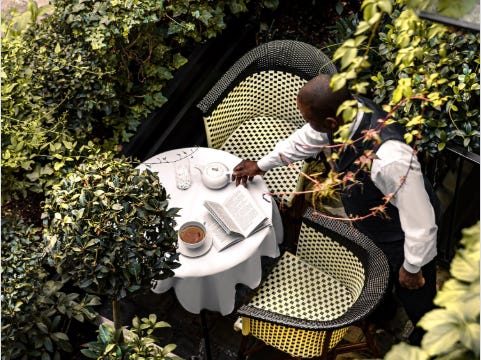
There is a particular feeling that well-run places create.
It comes from knowing that someone is there.
Not beside you.
Not interrupting you.
Simply there.
I’ve always been interested in the human response to hospitality. What makes it exceptional is rarely a single interaction, but the feeling that someone has thought carefully about how another person will experience a place.
I’ve noticed that people continually assess their surroundings.
We look for cues:
Who do I speak to?
Where do I go?
What happens next?
If I need something, who will notice?
When those questions go unanswered, people continue searching and uncertainty starts to build.
When they are answered, the mind can relax.
This is where presence becomes so important.
A receptionist who acknowledges your arrival before returning to their work.
A waiter who catches your eye from across the room.
A housekeeper quietly passing through a corridor.
A gardener tending the grounds.
None of these interactions is remarkable in itself.
Collectively, they create reassurance.
The guest no longer feels responsible for navigating the experience alone.
Presence doesn’t happen by chance. It is learnt, practised and reinforced until it becomes part of the culture. It requires emotional understanding, not only from leaders but essentially from all team members.
A room can be full of staff and still feel unsupported.
Equally, one person can create complete confidence simply by communicating, “I’ve seen you.”
Presence tells the guest that the environment is being cared for and, by extension, so are they.
For leaders, this presents an interesting challenge.
Presence cannot be written into a script.
It is created by culture.
By confidence.
By giving people permission to look up, notice, acknowledge and anticipate.
Not because every guest requires assistance.
But because every guest benefits from knowing assistance is close.
Presence is reassuring.
/Heidi