

The preparation that goes on behind the scenes before the doors open to guests is scared time that must be respected and adhered to without fail.

One of the essential elements of the foundation of preparedness within hospitality is pre-meal.
It’s when teams gather.
Information is shared.
Special occasions are remembered.
Responsibilities become clear.
The room is prepared.
But pre-meal is about much more than logistics.
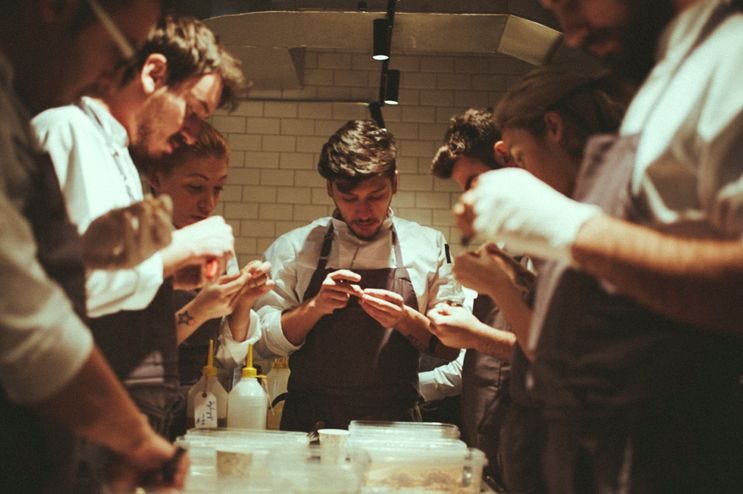
It is the moment a team prepares to receive people.
How that time is used matters.
How people are spoken to matters.
Whether they leave feeling confident, purposeful and trusted matters.
Because long before the first guest arrives, the experience has already begun.
Recently, I arrived at a pub with rooms just after midday on a Saturday.
I was the first guest through the door.
Several members of staff stood together while they were hurriedly briefed by a woman holding a pair of garden shears, explaining that she was about to trim a rhododendron.
When she finished speaking, nobody moved.
The room felt unprepared.
Not because the tables weren’t laid.
Or the flowers unfinished.
But because the people didn’t appear ready to receive a guest.
Even the arrival of a guest failed to create movement.
For a moment, I felt unwelcome.
This wasn’t their intention, but their pre-occupied steward tending to the garden left them lacking in direction.
Guests don’t judge readiness by polished glasses or perfectly folded napkins.
They judge it by the quiet confidence of the people within the room.
A prepared team moves with purpose.
They notice.
They anticipate.
They take ownership of the space before a guest ever asks for anything.
That confidence is contagious.
Guests relax because the room feels certain of itself.
They stop wondering where to stand.
Who to ask.
Whether they’ve interrupted.
They simply begin to belong.
I’ve come to believe that an open door may invite you in, but a lack of readiness stands in the way of a welcome and a sense of belonging.
Readiness is one of hospitality's invisible signals. Guests may not notice it consciously, but you can be sure they’ll feel it’s awkward absence.
/Heidi