

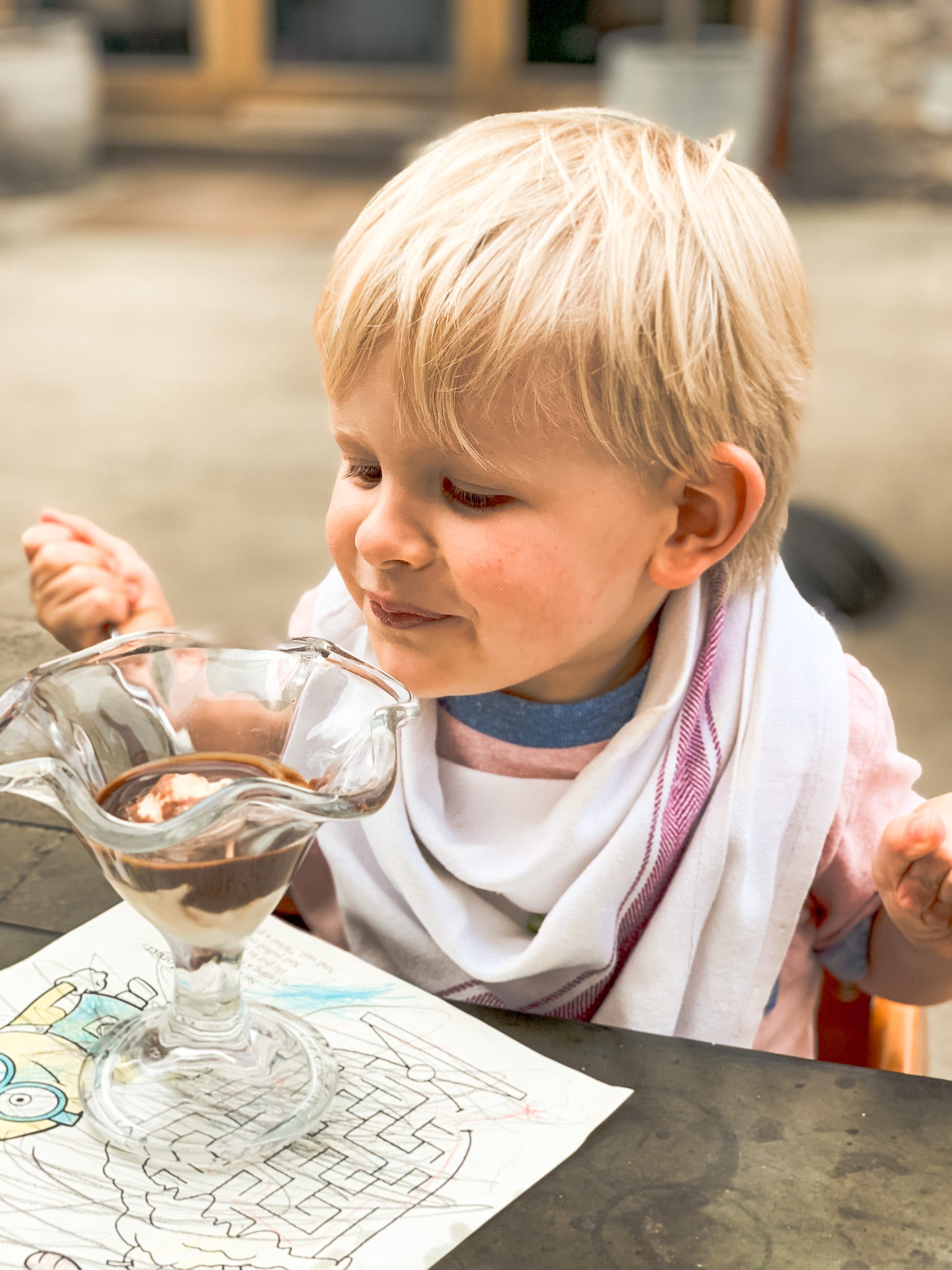
Children are often described as the smallest guests.
I wonder if they’re actually the most revealing.
It’s easy to create a children’s menu, scatter a few crayons across the table or add a play area to the corner of a room.
It’s much harder to create an experience that makes a child feel genuinely considered.
The difference matters.
A child’s experience shapes a parent’s experience. More often than not, it shapes the experience of everyone else in the room too.
When we visit The Bath Arms in Somerset, the team remember our children’s names. Crayons appear almost without asking. The children’s menu always has something fun printed on the back, and there are dishes my children already know they’ll enjoy.
These aren’t grand gestures.
They’re thoughtful ones.
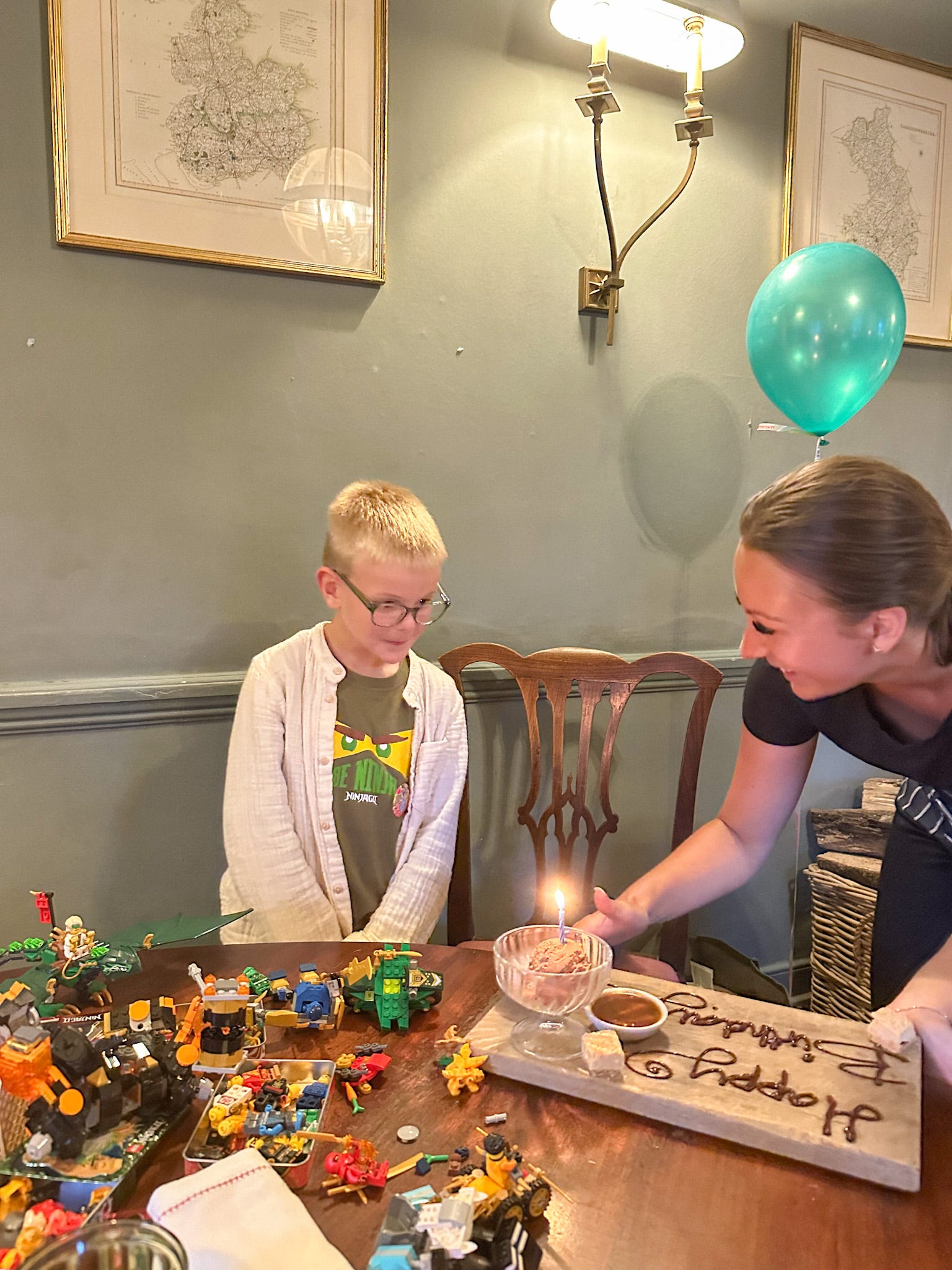
Our children know what to expect, and they look forward to returning.
Years ago, my husband and I spent our honeymoon at Palihouse in Santa Monica with our one-year-old son, Louis.
When we opened the door to our suite, a baby bed had already been made up for him. A bottle of champagne was chilling in the kitchen for us. Waiting on the bed was a small pony teddy, which quickly became ‘Palipony’ and travelled home with us.
The following morning, breakfast arrived with teddy bear-shaped pancakes to celebrate Louis’s first birthday.
Years later, we still talk about Palipony.
Not because it was extravagant.
Because somebody had imagined what it might feel like to arrive as a young family celebrating something special.
The memory isn’t really about the teddy.
It’s about the thought behind it.
Another memory has stayed with me for very different reasons.
One winter, while work was being carried out on our house, we stayed at At The Chapel in Bruton. Louis, who was two at the time, became unwell during the night.
The night porter quietly appeared with fresh linen and reassurance.
Nothing was too much trouble.
More importantly, he never made us feel that we were causing one.
Exceptional hospitality often reveals itself when things don’t go to plan.
Children, like all of us, want to feel seen.
They remember the waiter who crouches to their eye level.
The receptionist who greets them by name.
The chef who waves from the kitchen.
The small gesture that quietly says, We’re pleased you’re here.
Thoughtfulness, however, isn’t the same as attention.
One of the greatest skills in hospitality is knowing how to read people.
Children are no different.
Some children will happily tell you everything about their day before you’ve introduced yourself. Others stay close to their parents, quietly taking everything in. Some have been taught not to speak to strangers. Others simply don’t enjoy being the centre of attention.
The most thoughtful hospitality never assumes.
It notices.
It adapts.
It understands that children should never be expected to manage the boundary between themselves and an unfamiliar adult.
That responsibility belongs to the adult.
The warmest interactions are often the gentlest. A smile. A wave. A crayon placed quietly on the table. A conversation that begins with the parent before naturally including the child, if the child chooses.
I also remember an occasion when a member of staff became overly familiar with our daughter. Their intention was kind, but it left her visibly uncomfortable. We instinctively stepped in, reassuring her that she was safe and that we were in control.
The moment stayed with me.
Not because kindness was absent.
But because it reminded me that exceptional hospitality isn’t measured by warmth alone.
It’s measured by emotional intelligence.
The ability to recognise what this person, in this moment, needs from you.
Sometimes that’s conversation.
Sometimes it’s space.
Sometimes it’s simply a smile.
The more I study hospitality, the more I believe children reveal the quality of a hospitality system.
A place that has thoughtfully considered its smallest guests has almost certainly thought deeply about anticipation, flexibility, comfort, emotional intelligence and care.
Those qualities don’t stop with families.
They benefit every guest.
Children may be the smallest guests in the room.
But they tell us an enormous amount about the people who welcome them.
/Heidi